How early should I ask about a wedding dress?
Write as soon as you know the dress and the date. A closer date can limit how many fittings and how much structural work make sense.
Dallas, Texas
Hem, fit and closure work for wedding dresses, including lace and layered fabrics, with the scope agreed before sewing.
Call +1 (214) 381-3265 or email [email protected]
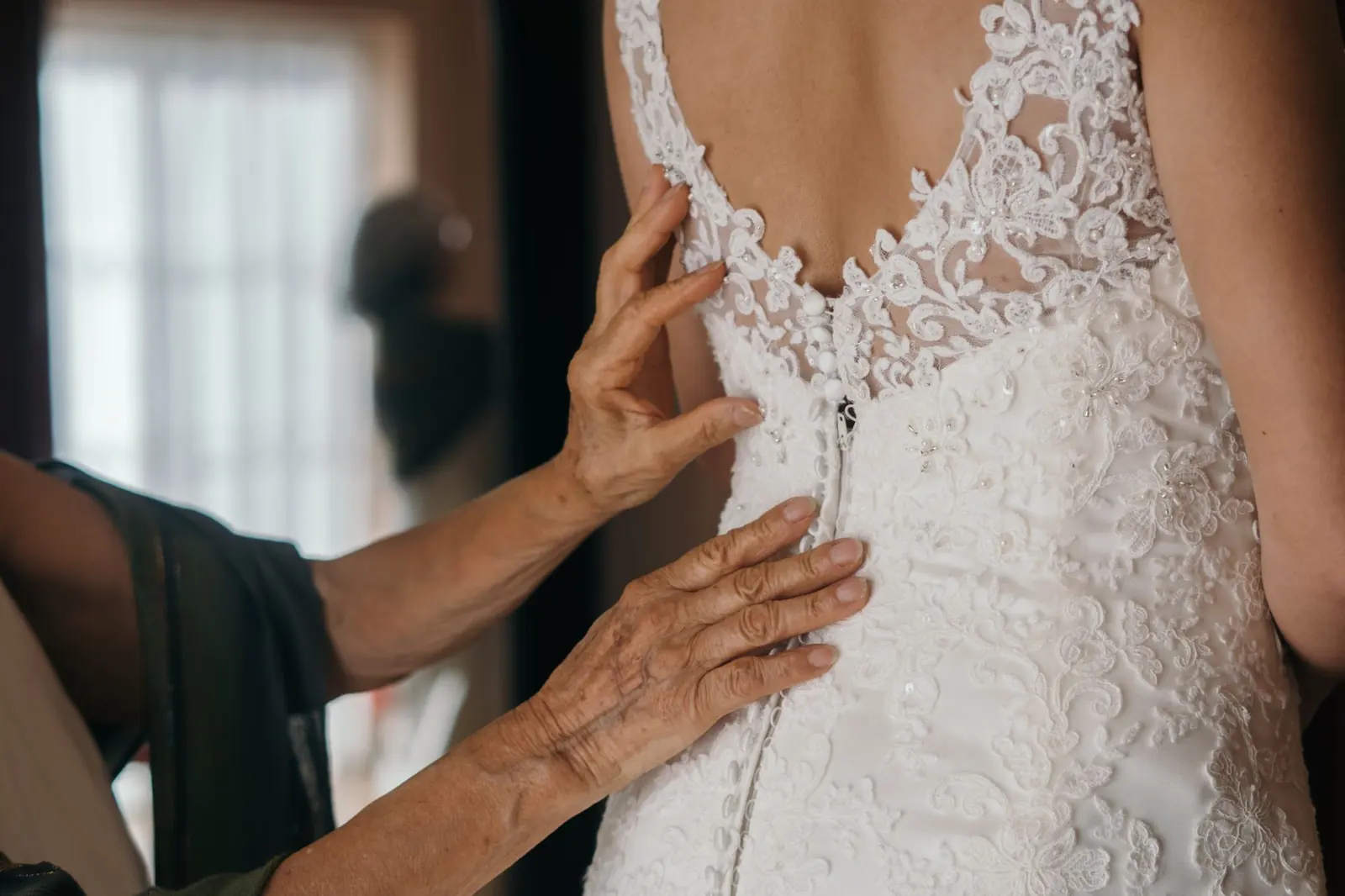
Wedding dress alterations are still fit and length work, but the garment is rarely a single layer of plain cloth. Lace, tulle, a separate lining, buttons, beading and a train all change how a hem or a seam is approached. A change that looks small from the outside can mean opening several layers and putting them back so they still hang together.
Ecomeva discusses that scope before any layer is separated. The dress you have, and the way you want it to look and move, set the plan. The page is not a catalogue of bridal techniques we claim as specialties. It is a clear account of how a wedding dress request is reviewed.
Hems are the most common request, including the difference between the front length and a train. Bust and strap fit, a waist or hip that needs to come in, and a closure that gaps or will not fasten are the other usual notes. A bustle can be discussed when you want the train controlled after the ceremony. Say whether you want a bustle at all, because it is additional work, not an automatic part of a hem.
Bridesmaid or reception dresses that are not the wedding gown itself are often closer to formal dress alterations. You can still describe them here if they are part of the same event and you want one conversation.
If a previous alteration has already been started, say so. Existing pins, a cut lining, or a zipper that was replaced once all affect what can be done next.
A wedding dress usually needs to be seen on the person wearing it before a hem or a bodice change is final. The request form does not book that fitting. It records the description and the date so the timing can be discussed. If the date is close, say that in the first message. A short timeline can limit which changes are sensible.
Layers are listed before they are opened. If beading has to be moved for a hem, that is part of the agreed scope, not an extra discovered halfway through without a conversation. You should know what will be changed and what will be left as designed.

A crepe gown with a clean hem is not the same task as a lace dress with a horsehair hem, a cathedral train, and a beaded bodice that also needs to be taken in. Each layer, each row of trim, and each fitting adds time. The dress, not a standard bridal package, drives the number.
No flat wedding dress price is published here. The estimate is discussed before work begins, along with what is not included. General notes are on the pricing section. If the only issue is a zipper that will not close, you can also read zipper repair and mention the gown’s lining.
Write as soon as you know the dress and the date. A closer date can limit how many fittings and how much structural work make sense.
Both can be discussed. They are separate decisions. Say whether you want the train shortened, controlled with a bustle, or both.
Mention it in the request. Trim that crosses a seam or a hem changes the time and has to be part of the agreed scope.
No. It saves the description and the date you provided. A fitting is arranged only after the request is reviewed.
Describe the garment and the result you want. The form saves the request so the work can be discussed.
Or call +1 (214) 381-3265